Dr Ayesha Khanna on AI’s Game-Changing Role in Emergency Healthcare and Pandemic Response
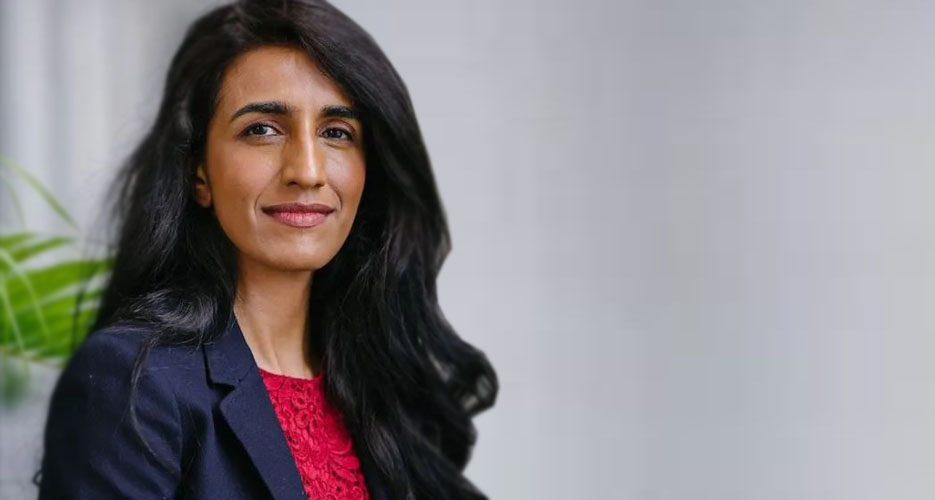
Dr Ayesha Khanna is a renowned artificial intelligence strategist and urban innovation expert, celebrated globally for helping governments and businesses harness emerging technologies to build smarter, more inclusive societies.
As co-founder and CEO of ADDO AI, she has advised cities and Fortune 500 companies on smart infrastructure, AI ethics, and digital transformation.
Named one of South-East Asia’s most groundbreaking entrepreneurs, Ayesha is also a passionate advocate for equitable tech solutions — from predictive healthcare systems to AI-powered financial inclusion.
In this exclusive interview with Champions Speakers, she shares real-world insights on how AI can revolutionise crisis response, healthcare, and access to capital — while ensuring technology remains human-centred.
Q: In what specific ways do you see AI transforming healthcare systems, particularly when it comes to predictive analytics and emergency response efficiency?
Dr Ayesha Khanna: “This immediately improves your response time. Then the second thing is, can you optimise your hospitals once you know that one area is in the red zone?
“So, for a hospital in the US, we actually predicted what their emergency queue lines would be every weekend — because people used to wait for hours in emergency queue lines, and that would result in deaths.
“Actually, looking at all the previous transactional, historical, clinical data, and examining variables such as weather, payday, etc., you can actually predict quite well the kinds of ailments that arise at different times of the year.
“By doing this, we were able to improve their forecast by 20%, and as a result, they knew when to put in more cardiologists, radiologists, more nurses, and certain types of paediatric specialists — all because we were predicting the kinds of patients who would come in. And the emergency queue line became shorter and shorter.
“So, this is an example of using artificial intelligence in a way that is not only good for business — for the hospital — or good for the citizens of a country, but also doing good.”
Q: Your work spans major health systems and ministries across Asia and the US. How are you leveraging AI and data integration to enhance crisis response and public health resilience in the face of pandemics and future health threats?
Dr Ayesha Khanna: “Well, we are working with one of the largest hospital networks in the US. We are going to be working with the Ministry of Health in one of the largest countries in Asia, and our main focus in both cases is crisis management.
“This is something that has become very important for all governments and large hospital networks around the world — including in Pakistan — which is: how do you optimise the response that a city or hospital network should have, by being able to predict where COVID, or any kind of pandemic, may occur next?
“You know that Bill Gates has already said we’ll probably have a pandemic every 10 years or so. So, to be a resilient city, the Ministry of Health needs to have a dashboard. On the dashboard, it first needs to be connected to many different data points that can be analysed to predict where the pandemic may emerge next.
“For this, what we are doing is connecting hospitals, clinics, and all of the telco data in this country in Asia, with information on who the people were, the areas they lived in, what the demographics were, what their symptoms were, and when they had COVID.
“By doing this, we are able to create a heat map. For example, if there were an area that is highly pedestrian, or that has a lot of traffic during the morning, or many roads leading into it, we know there’s a much higher chance that COVID will erupt there if there was a patient in an adjoining or connected area.
“Now, this may seem obvious — and often, in the beginning, AI confirms our intuition — but over time, it begins to pick up on other things that the human mind may not. For example, it may detect elements such as how many people go to a pharmacy to get certain medication, which actually serves as an underlying indicator for something else, such as their lung health, or how many smokers there are.
“Some of these connections can only be made when various data points are brought together and machine learning is applied. So, if you look at the AI lifecycle, it’s:
“First, gathering the data. That data then needs to be organised in what is known as a data lake — a huge repository of data. Once you examine this data, the machine learning engineers begin to take it out and model it, looking for connections beyond what the human eye, or a team of people using Excel, would be able to find.”
Q: With traditional banking still inaccessible to much of the global population, how can AI and alternative data models redefine financial inclusion in emerging markets?
Dr Ayesha Khanna: “We know that 68% of the adult population in emerging markets do not have access to a bank account. That means they can’t take out a mortgage, they don’t have a credit card, and no one will offer them one.
“So, the question then becomes: with this whole idea of alternative data — can you use other types of data from your digital footprint on the web, or your mobile phone, or any other alternative data source, to assess credit risk?
“I saw this in one of the microfinance TCO banks — there was a woman from Karachi who wanted to open a beauty salon. This woman has no education, she doesn’t have a job, she doesn’t have a degree — but she wants to open a beauty salon in one of the largest megacities in the world, where we know beauty and cosmetics are on the rise.
“Would you give her a loan? I think the issue is, most people would not — a traditional bank wouldn’t. But if she had an e-wallet, you would actually be able to tell if she pays her bills on time, what kinds of apps she has installed, what she’s browsing — is she on the phone all day watching YouTube, or is she working, maybe studying for her accounting degree, or watching beauty tutorials?
“Is she making international or domestic roaming calls? You could even give people a small psychometric form — and you can get information not only from what they input, but also from how fast they type, and whether they use lower case, upper case, or a mix of the two.
“Believe it or not, studies have shown that all of these factors have some correlation with your credit risk profile. We’re doing something similar as well. We’re currently working on a fintech product for Pakistan that would focus on offering nano-loans at various points in the customer journey.”
Q: When it comes to deploying AI for financial access, particularly in underserved regions, what makes these initiatives personally meaningful for you?
Dr Ayesha Khanna: “Why is this important to me? It’s not because I want to encourage everyone to recklessly take out loans — it’s because, in our country, people face disadvantages if they don’t have access to a bank, or they don’t have connections, or they don’t have a job.
“Most people say, okay, this is corruption so this is bad. But for me, what artificial intelligence does — through automation, by using alternative data to quickly assess credit and provide access — is that it frees up someone’s mind.
“I was listening to Guy Kawasaki — and he said that in order to be an entrepreneur or an innovative thinker, you must not be weighed down by the bureaucracy of the world or the government. I think that’s something we need to value — from the poorest to the oldest to the youngest person — and that is: do we value their time?
“And how can AI free up their minds from the bureaucratic nightmares of dealing with operations, banks, governments, and doctors — so that they can be better understood, their needs can be more clearly defined, and we can respond faster to them and provide access to capital in a timely manner? One that doesn’t take them years to get to the point where they can reach their full potential.”
This exclusive interview with Dr Ayesha Khanna was conducted by Champions Speakers.
For more information visit: https://champions-speakers.co.uk/artificial-intelligence-speakers