Fast Rail Route Between Liverpool and Manchester Full steam Ahead
Written By Harry Turnbull
A new high speed rail link between Liverpool and Manchester will be salvaged from the wreckage of the government’s failed HS2 project.
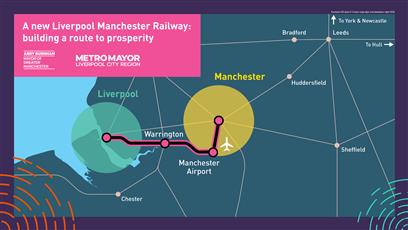
It will slash the current hour long journey to twenty five minutes and will include the revamp of stations and a new underground facility at Piccadilly.
The Liverpool Manchester Rail Board has been inaugurated to carry out the task exactly 200 years after its predecessor was formed to create the first commercial railway line in the world.
The new line will run between Liverpool Lime Street and Manchester Airport and will include revamped stations at Warrington Bank Quay and Manchester Piccadilly.
Andy Burnham and Steve Rotheram, the mayors of Greater Manchester and Liverpool City Region, said the scheme would boost the economy of North-West England.
Mr Rotheram said “From the world’s first passenger railway powered by Stephenson’s Rocket our region has been revolutionising Britain’s railways for centuries. But sadly, regions across the North have been forced to contend with infrastructure that wouldn’t look out of place 100 years ago. It suffocates growth and holds the country’s economy back.
“Transformative investment in better rail connectivity between our two city regions cannot and is more than just a regional project. This is a nationally important infrastructure scheme that would help to unlock the North’s enormous potential and deliver a greater return to the Treasury.”
He said unlike the scrapped HS2 link to Manchester, the scheme was “going to happen”.
“It won’t be like HS2 and promise after promise and nothing delivered,” he said.
“We’ve got the budget, we want to increase that but also we genuinely have the best interests of the cities of Liverpool and Manchester at heart.”
The plan is also to improve all cross country connections and establish a link between Liverpool and Hull.
The first Liverpool to Manchester line was launched in 1830 and included freight, passengers timetabling and signalling.