Quiet revolutions: How acoustic panels are reshaping northern homes and offices
In northern Europe, long winters and compact urban living create a very particular kind of noise problem. We build tight, energy-efficient homes with hard surfaces, large windows and open layouts. The result often looks beautiful in photos, yet sounds harsh in real life. Conversations bounce off walls, footsteps echo and everyday life feels more stressful than it needs to be. Into this setting steps a quietly transformative design element: the acoustic panel.
For years, acoustic treatment belonged mainly in recording studios, cinemas and concert halls. Now, it is moving into living rooms, home offices, restaurants and schools from Aberdeen to Aalborg. The shift is not driven only by sound engineers, but by architects, interior designers and homeowners who want calmer spaces without sacrificing aesthetics. The modern acoustic panel is as much a piece of interior design as it is a technical solution.
Why sound comfort matters more in the north
In northern regions, people spend a large part of the year indoors. Dark afternoons, cold winds and frequent rain push social life inside. That makes the quality of indoor environments crucial for wellbeing. Light, temperature and air quality receive plenty of attention, but acoustic comfort has often lagged behind.
Yet research on stress, concentration and sleep points in the same direction: noisy, echo-filled rooms increase fatigue and reduce productivity. Children struggle to follow teaching in reverberant classrooms. Remote workers lose focus during online meetings when every keyboard stroke and chair movement is magnified. Families end the day feeling drained without quite knowing why.
This is where acoustic design steps in as a subtle but powerful tool. By controlling how sound behaves in a room, it becomes possible to create spaces that feel calmer, more intimate and more functional. The goal is not silence, but balance: voices should sound clear, background noise should be softened and echoes should disappear into the background.
From technical necessity to design feature
Older generations of acoustic treatment rarely looked appealing. Thick foam tiles, perforated ceiling boards and heavy curtains did the job, but they clashed with modern interior trends. That is one reason many homeowners avoided them unless absolutely necessary.
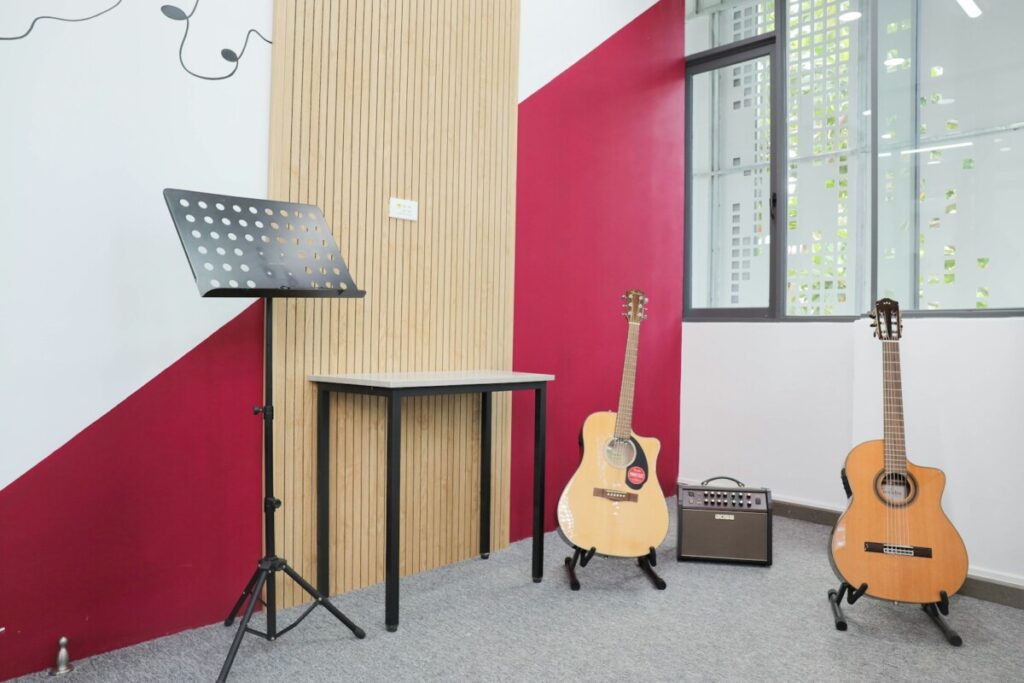
The new generation of acoustic panels changes that equation. Slim wooden slats mounted on a felt backing, textile-covered modules in muted colours and sculptural wall elements now offer a mix of performance and visual warmth. Instead of hiding them, designers showcase them as focal points.
In a Scandinavian-style living room, vertical wooden slats add rhythm to an otherwise plain wall while taming echoes from concrete floors and large windows. In a co-working space, coloured fabric panels double as art pieces and pin boards. Restaurants use dark, ribbed ceilings to create a more intimate soundscape, so guests hear their companions rather than the entire room.
The home office test
Remote work has made many people acutely aware of how their homes actually sound. Video calls reveal every echo, every clatter from the kitchen and every hallway footstep. A space that felt fine for reading a book suddenly feels inadequate when a microphone picks up every reflection.
A strategically placed acoustic panel behind or beside a desk often changes that experience dramatically. It absorbs part of the voice before it bounces around the room, making speech clearer for listeners on the other end of the call. Paired with a rug on the floor and perhaps a bookshelf on the opposite wall, it turns an ordinary spare room into a semi-professional workspace.
In smaller northern flats, where bedrooms double as offices, this kind of targeted treatment becomes especially valuable. Instead of rebuilding walls or installing suspended ceilings, residents add a few panels and immediately feel the difference in both sound and atmosphere.
Public spaces: From noisy canteens to calm meeting points
Schools, libraries and community centres across the north face a similar challenge. Budgets are tight, yet the demand for flexible, multi-use spaces grows. One room must serve as canteen at noon, study area in the afternoon and event hall in the evening. Hard floors and bare ceilings quickly turn such spaces into echo chambers.
Here, modular acoustic solutions offer a practical path forward. Ceiling rafts and baffles reduce overall reverberation, while wall panels placed at speech height improve clarity during lessons or presentations. In sports halls, robust panels withstand impact while preventing the booming sound that often makes communication difficult during training sessions.
Cafés and bars, meanwhile, discover that good acoustics are as important as good lighting. When guests do not need to shout to be heard, they stay longer, order more and are more likely to return. Subtle wooden panels, integrated into the décor, support that business case without making the venue feel like a studio.
Craft, materials and sustainability
Many northern homeowners pay close attention to sustainability and material choices. Acoustic panels fit naturally into that conversation when they use responsibly sourced wood, recycled felt or durable textiles. Some products incorporate felt made from recycled plastic bottles, turning waste into a functional element that improves daily life.
Wooden slat panels also resonate with traditional building cultures in Nordic and British coastal regions, where timber has long been used to create warm, tactile interiors. Combined with modern manufacturing, they bridge heritage and contemporary needs. The panels soften sound, but they also soften the visual impression of glass and concrete.
Installation has become simpler as well. Many systems mount directly onto existing walls with basic tools. That lowers the barrier for renters and homeowners who want better acoustics without a full renovation.
A quieter future indoors
As more people notice the difference a single well-placed panel makes, acoustic design is likely to become a standard part of planning, not an afterthought. Just as energy labels and insulation are taken for granted, questions about reverberation time, speech clarity and noise control will move into everyday conversations about homes, schools and workplaces.
In the north, where indoor life plays such a central role, this shift promises something important: spaces that support focus, rest and social connection instead of fighting against them. The acoustic panel started as a niche tool for specialists, but it is gradually turning into a quiet revolution on our walls and ceilings, shaping how we live, work and gather when the door closes and the outside wind begins to fade.