Founder of Unilever Empire Being Investigated Over African Plantations
Written By Harry Turnbull
Museums across Merseyside are planning to highlight the African exploits of one of the region’s most celebrated philanthropists.
For more than 100 years Lord Leverhulme has been hailed as an iconic British industrialist and supporter of workers rights.
He famously created the model village of Port Sunlight in Wirral for his soap factory employees.
But his reputation is about to receive something of a makeover as museum researchers investigate his treatment of forest workers in the West African country of Congo. It is now known the workforce was subject to forced labour and exploitation as Leverhulme took over huge plantations of palm oil trees to fuel his soap factory in England.
Work is being undertaken by National Museums Liverpool (NML) along with the Port Sunlight Village Trust’s museum with the objective of providing a balanced view of Leverhulme’s exploits at home and abroad.
William Lever was born in Bolton in where a blue plaque to mark his birthplace has been torn down by activists who campaign against British Colonial oppression.
The company he founded evolved into Unilever, today a global giant that has brands ranging from Persil to PG Tips.
Lever became successful in England but ventured abroad to find the palm oil from trees that was needed to make his famous brand of Sunlight soap.
A spokesperson from NML said “Current research into the activities of Lever Brothers in the Congo and further afield is being carried out by members of the Port Sunlight Partners Group, which includes NML.
“Most of the research is being carried out in the archives of Unilever, which developed out of Lever Brothers, by members of staff from Liverpool University, in partnership with the University’s Black History Research Group, the Centre for the Study of Slavery, and the Congolese Association of Merseyside.
“This research is not yet at a point where it can be shared and its outputs published, as it’s still on-going, but eventually it will be made public in some form.”
Messages have goneu p on the Port Sunlight museum site and nearby the Lady Lever Art Gallery will also be involved in appraising its exhibitions.
Unilever stated “William Lever (1851–1925) was one of Unilever’s founders and a widely recognised industrial reformer. He did much to drive progress on women’s rights, workers’ wellbeing, and other social causes. His progressive values set the foundations for our commitment to equity, diversity and inclusion in our own business and the communities we serve.
“Despite his explicit instructions that workers be well treated and paid fairly in Congo there is evidence of illegal use of forced labour and other mistreatments.
“We abhor any and all forms of racism, discrimination or worker abuse. The fact that such behaviours occurred in a different age does not excuse them – we deeply regret this part of our history.
“It is currently difficult for us to say exactly how much William Lever benefited from these activities. To ensure we can tell a truthful and balanced story about his legacy, we have commissioned researchers to investigate the history of the Lever companies in Solomon Islands and Democratic Republic of the Congo. An Independent Panel will oversee the research work to ensure it is accurate and transparent and, once completed, we will publish the findings.”
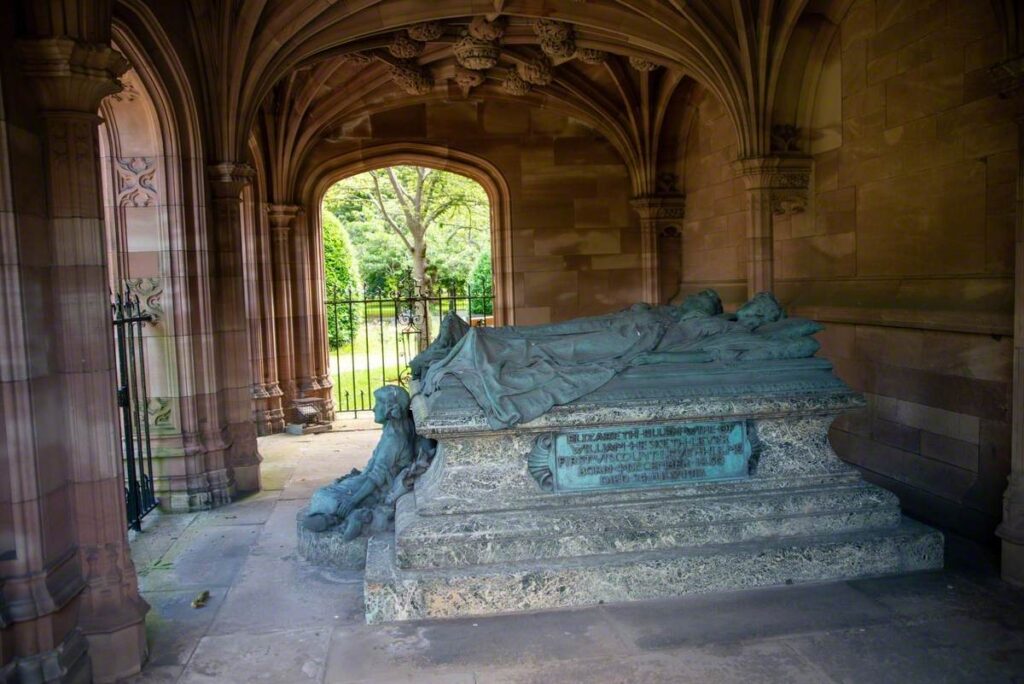
Lord Leverhulme died from pneumonia in 1925 after a trip to Africa and is entombed in Christ Church, Port Sunlight along with his wife Elizabeth.